When Nordic governments, financial institutions and key industries met in for NESPO’s Working Dialogue on the geoeconomic landscape, one theme dominated: Nordic organisations are facing a more complex and fragile operating environment, and technology plays a central role in responding to it.
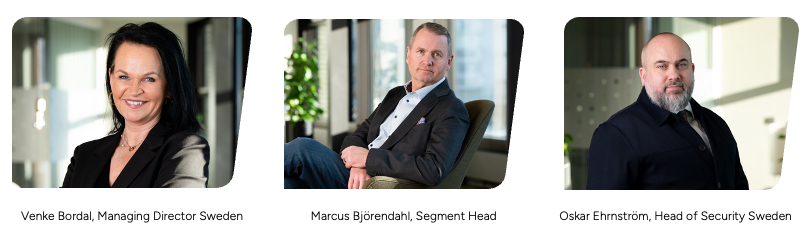
For Vivicta, joining this forum offered a valuable opportunity to understand how digital resilience, data flows and cross-border dependencies increasingly shape strategic decisions. We spoke with Managing Director Sweden Venke Bordal, Head of FBI segment Marcus Björendahl and Head of Security Sweden Oskar Ehrnström to distil what matters most for our clients and partners.
Economic security is increasingly a technology question
Venke Bordal:
“What stood out is how tightly economic security now connects to competitiveness. Many disruptions that were discussed, inspections, delays or technical bottlenecks, hit digital systems and data-dependent processes first. For organisations that rely on continuous digital flow, these slowdowns become business-critical very quickly.”
Venke highlights examples shared at the forum, such as technical inspections at borders causing unexpected delays or regulatory checks that suddenly restrict access to key digital services.
“These may not sound dramatic, but they can destabilise entire chains of work and service delivery. That’s why technology, communication and security need to be understood as one system.”
Scenario work exposes weak points and shows where collaboration matters
Marcus Björendahl:
“The scenario sessions forced us to look at practical impacts. One case showed how a single digital chokepoint could interrupt a critical flow, while another explored how quickly organisations must turn to substitutes or backups.”
Many of the insights linked directly to the Nordic tech ecosystem.
“What became clear is that resilience isn’t only about having the right tools, it’s about knowing how systems behave under pressure. And that requires collaboration. When public agencies, infrastructure operators and private companies share insight, you see how issues in one part of the ecosystem ripple into others.”
Marcus emphasises that Nordic organisations already have strong foundations in digital trust and interoperability.
“With the right partnerships, we can turn that into an advantage.”
Hybrid threats underline the need for coordinated response
Oskar Ehrnström:
“One of the most relevant discussions for us was about hybrid threats. We heard examples where a minor IT disturbance became far more serious when accompanied by targeted online rumours or misinformation. The combination creates confusion and erodes trust long before the technical issue is even resolved.”
From an IT-consultancy perspective, Oskar stresses that resilience planning must blend technology, communication and decision-making.
“It’s no longer enough to restore a system. You need to control the narrative, coordinate the response and keep stakeholders informed throughout. That’s where organisations often struggle.”
Technology adoption, Europe’s challenge and opportunity
Another insight from the forum was Europe’s difficulty in scaling technology. While research capacity is high, adoption and implementation can be slow. For Nordic companies, that creates a dual responsibility:
- Adopt digital solutions earlier and more consistently
- Remove internal obstacles that delay implementation
Venke Bordal:
“We sometimes chase the ‘next big technology’ but underuse what we already have. Real resilience often comes from making existing systems interoperable, well-managed and transparent.”
What Nordic organisations should do
1. Map your digital dependencies
Where does your organisation rely on single points of failure - suppliers, systems, or data flows?
2. Strengthen cross-functional crisis capability
Bring IT, security, operations and communication together before an incident occurs.
3. Act early, not reactively
Small technical weaknesses become strategic risks quickly in a connected landscape.
Vivicta’s role
For Vivicta, the forum confirmed that digital resilience is now a strategic capability. Our role is to help organisations:
- understand their digital dependencies
- stress-test systems and workflows
- strengthen crisis communication and decision-support
- build resilience across their ecosystem
If you want support in translating these insights into practical steps, we’re here to help